+1 312 517 0995
Customized packaging is a customized boxing design that is created to fit your unique brand products. The packaging cost in 2026 relies not solely on the raw paper materials. It relies on design detail and structural engineering layers and factors in shipping efficiency. Business owners must be kept up to date with the process before they order any bulk items. An average custom mailer box would cost a relatively low amount in small retail volumes. The majority of the emerging brands are more inclined to bulk purchases of between $0.50 to $1.50 per unit. This difference in the price is based on the style of the brand and the manufacturer selected. The higher the quality of the finishes you select, the higher the price you will pay per box.
What is Custom Packaging?
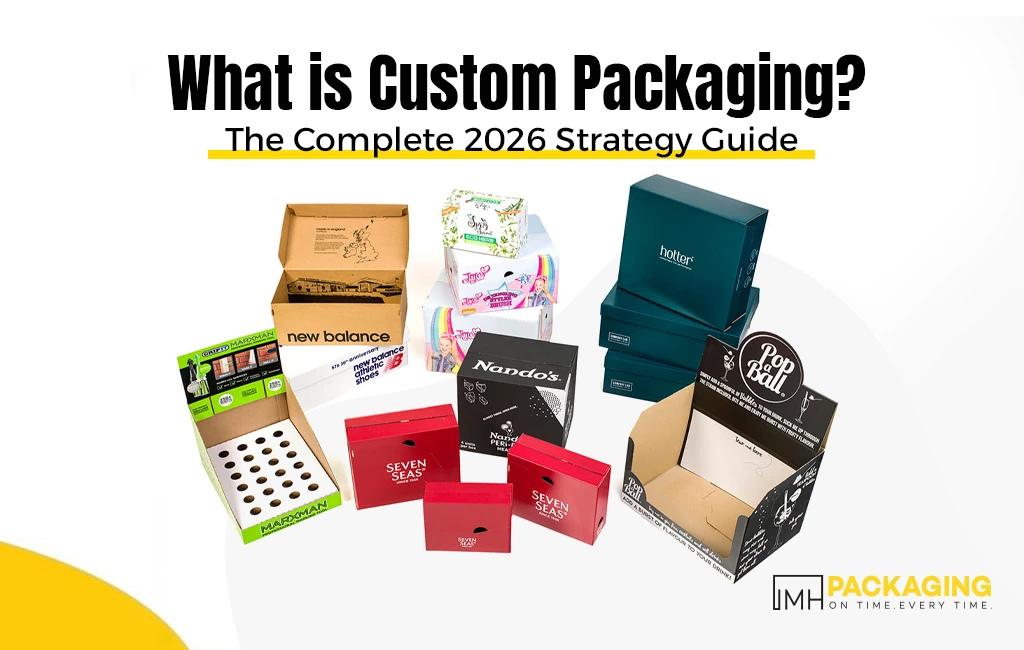
Custom packaging is a specialized form of manufacturing in which shipping containers are designed based on the specifications of a product, as well as a company with its unique brand image. This approach is a break-off of generic boxes and applies personalized materials, engineered structures, and high-end printing finishes. The major aim is to ensure maximum product safety and increase the experience of the customer. Custom boxes represent a two-fold solution in the contemporary marketplace. They both provide a protective barrier during shipping and a marketing powerhouse on the front door. This renders them an essential need for e-commerce enterprises and retail brands intending to grow.
Why Custom Packaging is Important for Business Growth
The costs of custom boxes are affected by the degree of protection and brand message. Other than this, other special coatings such as gloss or matte are also used on the total surface. An excellent box will guarantee your product gets to the customer untouched and without any scratches. Manufacturers must also include their own labor expenses for the complicated folding and gluing process.
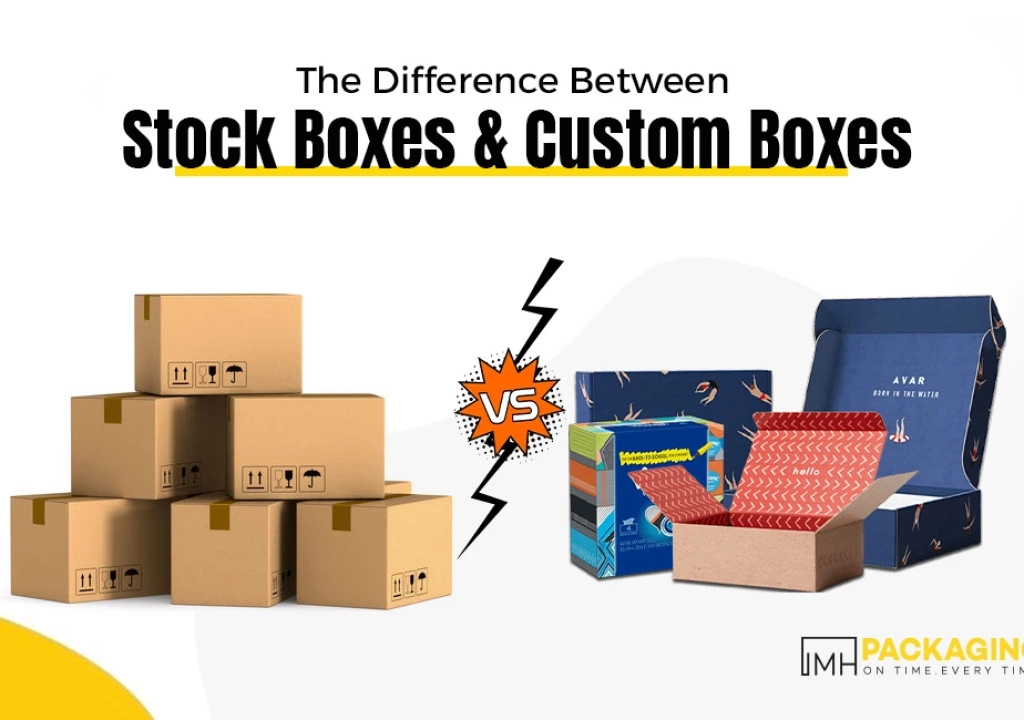
Difference Between Custom and Stock Boxes
Stock is a simple packaging solution that is quick and cheap. Despite its affordability to start-ups, it lacks a clear brand name and might require more void fill to secure items. Custom packaging, however, is a unique system that is tailored to fit your product. It is more secure, eliminates shipping garbage through efficient sizing, and turns an average delivery into a brand experience. The start-up costs involved are also higher, but the long-term ROI is significantly improved since the damage rate is lower, and customers are retained.
Building Brand Recognition
Each company must be able to position itself among the competitors in an extremely saturated online market. The custom boxes will have a professional look, which will develop trust in your loyal buyers today. They also safeguard objects during long shipments to make sure that they arrive very safely and in good condition. Good quality materials translate the worth of the brand to each and every consumer who makes a purchase. Good design is an investment that will make your company grow much quicker than plain stock packaging.
Creating the Unboxing Experience
Unboxing moment is a good marketing tool that links your brand with the consumer. Customers like getting a package that resembles a special gift box and opening it. This emotional attachment is likely to result in good reviews and organically mentioned social media sites. This moment can be made very memorable by using internal printing or using custom tissue paper. An excellent unboxing experience makes a purchase a memorable one for your customer.
The Benefits of Personalized Shipping Boxes
Many advantages of personalized containers assist in saving money and time for expanding brands. They minimize the use of additional bubble wrap since the fit is extremely tight. This particular sizing will reduce the total shipping expenses because it decreases the total weight and size of the package. Online, the brands also experience a growth in the number of social media shares by satisfied customers every day. Developing an iconic unboxing experience will result in increased retention and repeat shopping at your store.
Lowering Shipping Costs via Dimensional Weight
Dimensional weight is the cost used by shipping companies to estimate the cost of sending your packages to customers. Big boxes with a high percentage of dead air are more expensive to transport nationwide. Custom boxes are created to be the smallest size and yet safe enough to protect the item. This accuracy assists you in not paying for air shipping, which saves your business a lot of money. Each inch that you take out of your box design will be added to your overall annual profit margin.
Reducing Product Damage and Return Rates
By using an oversized box, you risk your product bouncing around during transit. This movement is the main reason behind the broken pieces and costly customer returns of brands. A product is packed in custom packaging to ensure that it is firmly held in place, ensuring that it does not move due to the rough shipping process. Even a small percentage in damage rate saves a lot of money every year. The best method of making sure that your customers are happy and very loyal is safe delivery.
Read More: Top 10 Benefits of Using Printed Packaging for Businesses
Comprehensive Technical Comparison of Custom Packaging Materials
| Box Style & Material | Material Density (GSM) | Best Industry Use | Protection Level | Price Range (Bulk) | Est. MOQ |
| Corrugated Mailer | 350 - 450 GSM | E-commerce & Subs | Extreme | $0.85 - $1.45 | 50 Units |
| Folding Carton | 250 - 350 GSM | Cosmetics & Pharm | Moderate | $0.25 - $0.65 | 500 Units |
| Rigid Luxury Box | 800 - 1200 GSM | Jewelry & Tech | Maximum | $3.50 - $6.00 | 100 Units |
| Kraft Mailer | 300 - 400 GSM | Organic Brands | High | $0.65 - $1.10 | 100 Units |
| Gable Box | 350 GSM | Food & Events | Medium | $0.90 - $1.30 | 250 Units |
| Pillow Box | 200 - 280 GSM | Small Gifts | Low | $0.15 - $0.40 | 500 Units |

Top Custom Packaging Trends in 2026
The packaging industry environment is evolving at a very rapid pace, and companies that adopt the new trends tend to record a drastic growth in their market share.
The Interactive Smart Packaging
They are also printing the interactive QR codes and NFC tags on the packaging of their brands. The technology bridges the disconnect between the physical and digital worlds and uses the technology to allow consumers to scan a box to get video tutorials, exclusive discounts, or brand stories.
Minimalist Design Aesthetic
Modern consumers are moving towards quiet luxury. This is a trend of clean typography, black and white color schemes, and plenty of white space. By avoiding excessive graphics, brands can create a high-quality and high-end experience that will be attractive to high-end customers.
The Increasing Shift to Sustainability
Green has become not an option, but a norm in the industry. Companies are moving toward using plastics less and biodegradable inks, compostable inserts, and paperboard that is 100 per cent recycled. Green materials are not only beneficial to the planet, but also increase brand loyalty among customers who are environmentally conscious.
The Most Popular Materials in the Packaging Industry
Corrugated cardboard is a combination of three layers of strong paper that are strongly attached to each other. Its middle layer is wavy and adds much cushioning to all your products. This is the material that is highly applicable to the mailing of fragile items in the mailing system. It comes in any thickness to fit all your heavy loads. This is why this material is highly used in most shipping companies due to its high strength that is relatively cheap.
The Strength of Corrugated Flutes
The wavy center panel of a corrugated box is used as the material of the flute. E-flute/ B-flute sizes provide a range of strengths and cushioning. E-flute is very narrow and smooth, and ideal for printing retail and high-quality printing. B-flute has more weight and can be transported with heavier items that need more structural reinforcement. The right size of the flute prepares the right size of the box to fit your needs.
The Versatility of Paperboard
This is thick paper that is single-layered and is quite light compared to corrugated cardboard. It is best adapted when the object is small and does not require heavy-duty use. Paperboard can be used to shape your product into any shape. It is a much-desired material that is applied in retail shelf display in the cosmetic and food industries. It provides a modern, sleek look that will help to attract more customers in the present day to your product.
The Impact of Sustainable Packaging on Consumer Choices
Modern consumers mostly prefer to go for brands that are manufactured with eco-friendly materials to construct their product boxes. Recycled paper and plant-based inks are used in sustainable packaging to conserve the environment around the world. This is an alternative that proves that your business cares about the future of the entire planet. Containers that are not plastic will make many people spend a larger amount of money on the products. The large local suppliers are now offering eco-friendly alternatives that can be easily accessed.
Using Recycled Content (PCR)
The quantity of custom boxes is now manufactured with 100 percent post-consumer recycled paper and cardboard. This means that the box was made out of old paper, which was recycled. Recycling can save much energy and require fewer new trees. You may print on your shipping boxes that is a great selling proposition. The customers are happy to buy a brand that attempts to eradicate its waste.
Biodegradable Inks and Coatings
The printing inks that are utilized in traditional printing are generally of poor quality for the air and water systems. The most popular packaging being used is now soy or water-based inks that are much safer to the planet. Alternatively, you can use such coatings that break down as opposed to lamination layers composed of plastic. These small changes will make your entire package biodegradable and home compostable. Ecofriendliness is not a fashion anymore, but a requirement of modern business.
The Technical Design Process for Custom Branded Boxes
The design process starts by measuring your product so that you can always get the correct measurements. You must create an electronic file, called a dieline, for the professional printing machine. You should always use the same colors that match your brand in order to make sure that you have the same visual look. Also have a logo where the customers can view it very easily,y because they identify with your brand. Always look at a physical sample box before a sizable and expensive production is ordered.
Creating the Dieline Blueprint
The dieline is the 2D drawing of all cuts and folds of your box. It is a technical file that needs to be faultless to get the box to work. Designers use software like Adobe Illustrator to place their art on this flat box map. You must consider the location of the flaps so that your logo will not be cut off. The foundation of a successful custom packaging project for your brand will be a quality dieline.
Selecting Modern Printing Techniques
Digital printing is the best option to use in short runs because it does not involve the use of expensive metal plates. The colors provided in offset printing are more accurate and are much less costly for large orders. Flexography is commonly applied to plain designs on brown corrugated shipping boxes and mailers. Costs and lead time are something you must negotiate with your supplier. Choosing the right technique will give you the means by which you can balance your budget and your goals with the quality of visuals.
A Complete Guide to the Ordering Process of Custom Packaging
To accomplish the optimal packaging, it is as simple as working in a rational step-by-step workflow.
Proper Product Auditing: Take care to be accurate when making measurements, and be sure that you measure your item, including any extra accessories and padding.
selecting a strategic material: This can be selected based on the weight of an object and the distance it is to be delivered over, e.g., corrugated cardboard or rigid board.
Dieline Construction: Work with a designer to create a 2D technical drawing. This map will show where the machine will cut and fold the material.
Art Implementation: Place your dieline with brand colors and logos. Also, ensure that you choose the right printing style, e.g., Offset when a large quantity, and Digital when a small quantity.
Quality Check: Finish the process by requesting to have physical samples. Once the fit and quality of print have been tested, you are assured of a complete production run.

Key Errors to Avoid When Customizing Packaging
Other organizations also incur huge losses in their packaging strategy as a result of simple, avoidable errors.
The Probability of Sizing Oversized: Such boxes may be a frequent and costly error. Bulky packaging doubles dimensional weight shipping costs and leaves unnecessary space in which the products may fall, which in most situations can result in damage.
The Trap of designing: Finishes like gold foil are very beautiful, but too much designing of a box can bring about undeserved costs of production. It is important to strike a balance between aesthetics and practical simplicity.
Risk of Not Planning Prototypes: Leaving out a sample can be one of the risky mistakes that a brand will commit. A physical prototype should be tested at all times to make sure that the product fits perfectly and that the material will be in a position to support the weight of the product.
Why Every Business Needs a Custom Solution
Different prices have to be expected when you are asking about the cost of a bespoke package. Quality and quantity are the greatest outliers in the ultimate price of the brands everywhere. Other than this, the level of brand information and environmental concerns amongst the people also contribute. Proprietors of enterprises may have to find new materials, but cardboard is the king. The propensity towards smart packaging also implies that, in the near future, it will grow exponentially.
The customization you see today in packaging is not simply a box in which you place your products at your local retail store. It is a protection, promotion,n and savings costs that are incurred during shipping. It successfully links your online shop and the home of the customer. The first action that your brand ought to take at the given moment is to invest in good-quality boxes. More sales and better reviews will be achieved, and less spending will be made in the long run.