 +1 312 517 0995
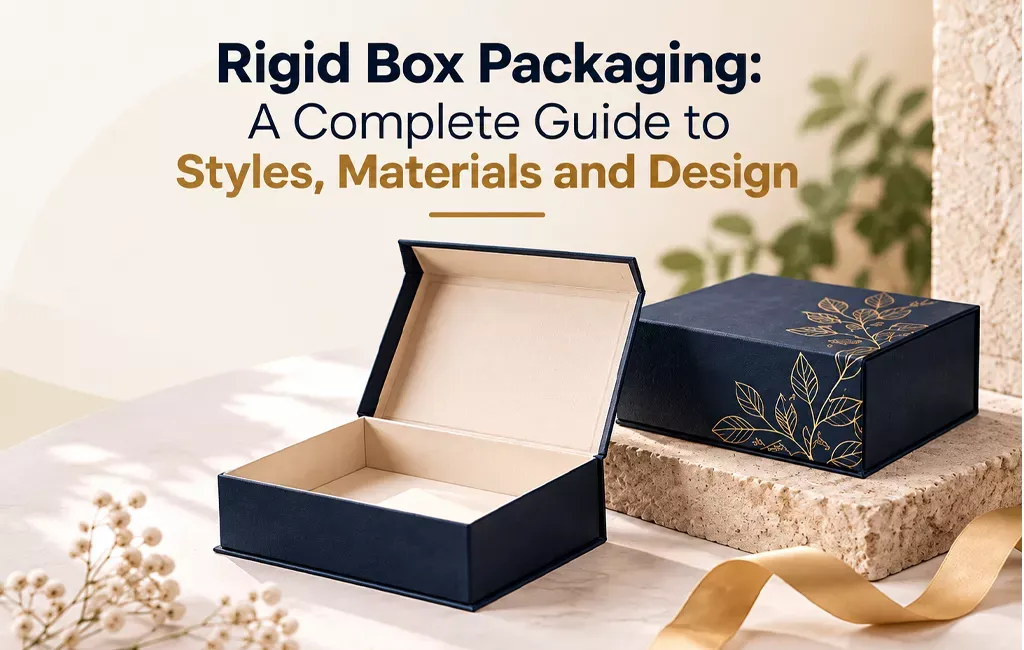
Rigid box packaging is the solution for businesses wanting to ensure an eye-catching and strong packaging solution for their products. Rigid boxes packaging is frequently used to package cosmetics, jewelry, perfumes, electronic equipment, candles and even corporate gifts. Unlike folding cartons, rigid boxes use stiff paperboard which retains its form.
Choosing the right design goes well beyond choosing a certain color or finish. A number of factors need to be considered such as the box construction itself, paperboard thickness, size of the product, the inserts and transportation needs. Choosing the right combination will make sure your product presents itself well without blowing your budget on packaging.
What Is Rigid Box Packaging?
The rigid box package consists of a very strong paperboard that is referred to as greyboard or chipboard. The rigid box has the form due to the paperboard and is covered by some kind of printed paper, special paper or other cover material.
The rigid boxes are also called the set up boxes, as they come assembled usually. The rigid box can have lid, hinges, sliders and inserts in accordance with the design.
The company will go for the rigid box if it is important both to present the product and store it well. But still, the rigid package does not mean that it will be water-proof or strong enough for shipping.
Rigid Boxes Compared With Other Packaging Types

Each of the packaging forms has its own function. Comparing their structure and uses will help the business make the right choice.
Box type | Structure | Most suitable for | Shortcoming |
Rigid boxes | Sturdy board material with decoration on top | Luxury items, gift items and high-end retailing | Higher costs and larger storage space |
Folding boxes | Slender board material molded to the box form | Cosmetics, small retail items and consumer goods | Lack of sturdiness |
Corrugated boxes | Board material with fluting between two liner materials | Distributing, transporting of goods and heavy articles | Good appearance will need further design efforts |
Mailer boxes | Typically made from corrugated board material with locking flaps | Products for e-commerce, subscription and direct delivery | Fragile products may need further internal protection |
Rigid boxes are appropriate for high-end presentations. Folding cartons may be more cost-effective for normal retail packages. Corrugated boxes and mailers are usually more practical if distribution and shipment are more important considerations.
Common Rigid Box Styles and How They Open
Various rigid box designs have different openings and product displays.
Two-piece Lid and Base Boxes
This classic design has a lid and a base box separately. The lid could cover the entire base or just a portion of it. They are usually employed in jewelry, candles, apparel accessories, and gifts. Businesses can distinguish their packages through contrast wraps or printed lids.
Magnetic Closure Boxes
The magnetic closure boxes have a hinged lid and hidden magnets. This ensures that the package stays closed and provides an elegant opening. They are typically employed in cosmetics, fragrances, promotional packages, and corporate gifts. Their wide panels can help in branding and printing.
Drawer or Slide Boxes
In the drawer or slide box, there is an inner tray that slides out of an outer sleeve. The pull ribbon or cloth can aid in this process. It is appropriate for watches, jewelry, small electronics, and luxury accessories.
Book Style Boxes
The book style box will have an opening mechanism like a book. The inner side can be used to carry any information or even a custom message. This kind of box is usually chosen for product launch boxes, beauty collections and collection boxes carrying multiple products.
Shoulder Neck Box
A shoulder neck box will have a raised structure between its lid and bottom. This gives a layered appearance and gives the definition between the two parts. Such boxes are used for premium gifts, fragrances and select retail products.
Round Rigid Boxes
Round rigid boxes will have a cylindrical design as opposed to the normal rectangular designs. They offer a distinct look for shelving and are suited for certain products. These boxes are used in candles, candies, speciality gifts and certain cosmetics.
Foldable Rigid Boxes
Rigid boxes which are foldable shrink to size for storage and assemble at the time of use. They are helpful in making a presentation without maintaining each box in a complete form. These boxes are helpful for sets, gifts, and packaging in apparel and promotion where rigid presentation is required.
Choose The Rigid Packaging for Your Product Category
The best form of construction is determined by the size, fragility and presentation of the product.
Cosmetics & Beauty Products
Beauty kits have jars, bottles and other accessories of varying sizes. A magnetic or book style box will ensure all the components are organized in one pack. An insert will help secure each element in its rightful place.
Fragrances and Perfumes
Glass fragrance bottles require a box with a space to fit the body, lid and any embellishments of the bottle. Lid and base or magnetic closure boxes will be ideal presentation methods.
Jewelry & Watches
Small rigid boxes can incorporate inserts made of fabric or shapes to present jewelry. The design must accommodate the dimensions and shape of the jewelry.
Candles
Rigid boxes make candles look like a gift. The design must take into account the diameter, height and weight of the candle container. Glass containers will require an insert.
Apparel and Fashion Accessories
Collapsible rigid boxes are suitable for packaging scarves, ties, small leather goods and some accessories. The size of the box must fit the product without creating unnecessary empty spaces.
Corporate Gifts and Product Launch Kits
Magnetic closures and Book Style Boxes can contain corporate gifts, stationery, accessories and other promotional items. Compartments can be used to organize various products in a single presentation box.
Confectionery and Bottled Gifts
Rigid boxes are suitable for packaging chocolates, confections and gift bottles. The materials need to be food contact compliant in case of food products. The box also needs to consider the weight and form of the contents.
How Rigid Boxes Are Made: Materials and Construction

Rigid box construction combines a structural core with exterior and interior coverings. Material selection affects the finished box`s stiffness, weight, appearance and cost.
Greyboard Thickness
Greyboard or chipboard forms the main structure. The required thickness depends on box dimensions, product weight and construction.
Thickness of boards | Approximate thickness in points | Possible applications |
1.0 mm | 39 pt | Small lightweight presentation boxes |
1.5 mm | 59 pt | Compact retail/gift packaging |
2.0 mm | 79 pt | Premium packaging |
2.5 mm | 98 pt | Presentation boxes |
3.0 mm | 118 pt | Selected boxes for thicker core |
One point equals 0.001 inches. One millimeter equals roughly 39.37 points. The abbreviation is GSM, standing for grams per square meter. It does not measure thickness but the weight of the material.
Exterior Wraps and Interior Coverings
The exterior wrap provides the color, texture, and print design to the box. Common exterior wraps include coated papers, uncoated papers, textured papers, and special papers.
For the interior part, you may use a wrap which matches or a different color altogether. You may also use fabric style covering for selected premium designs.
Closures and Assembly Components
Magnet is widely used in hinged closure boxes. The ribbon works as the pull for the drawer. Adhesive will stick the board, wrap, and other internal components together.
The selection of these components depends on the design of the box. For magnetic boxes, the closure needs to be tested with the final box itself instead of selecting based on magnet strength alone.
How Printing and Finishes Shape the Final Design

The printing gives an idea about the brand image and product details. The finishes provide visual contrast and different looks.
Finish | Visual effect | Main consideration |
Matte Lamination | Smooth finish with little glossiness | Results in a dull finish |
Gloss Lamination | Glossy surface | Brightens up the colors |
Soft Touch Lamination | Faux velvety feel | Can be easily scratched in some cases |
Hot Foil Stamping | Metallic or colorful accents | Can be used for logos or other specific areas |
Embossing | Raised design | Adding texture to letters and designs |
Debossing | Recessed design | Design that is indented into the substrate |
Spot UV | Glossy finishes applied to selected areas | Contrasts with the less glossy substrate |
Aqueous Coating/Varnish | Surface coating with different levels of glossiness | Depends greatly on the chosen coating |
Full surface finishes include most of the intended surface area. Partial finishes bring attention to certain details like a logo, design or product name.
The art and the wrap must be compatible with the selected finish. Companies that are worried about recycling must also consider finishes, foils and laminations when choosing their packaging company.
Choosing the Right Insert And The Interior Around Your Product
The insert is used to organize the product within the box. The insert must be appropriate for the product’s size, weight, fragility, and presentation needs.
Insert Material | Application | Consideration |
Paperboard | Items which need to be light | Could be formed into compartments |
Foam | Fragile items and need proper fitting | Type and density should match the item |
Molded Fiber | Bottles and other selected items | Performance varies depending on molded design |
Plastic Tray | Products which require proper cavities | Difficult to recycle if used alongside paperboard |
Fabric/Padded Lining | Jewelry and premium accessories | Makes the interior of the packaging more decorative |
Before manufacturing begins, the cavity sizes should be verified, along with ensuring that customers will be able to easily take out the product. Prototypes will highlight any issues with fit before producing an entire order.
The Practical Advantages and Limitations of Rigid Boxes
There are various benefits provided by a rigid box for premium product display.
- Shape consistency: It sustains its shape while being handled normally.
- Presentation of the brand: Wrapping and finishing present scope for designing.
- Organizing of the product: Inserts could organize various items within one box.
Moreover, it could also be reused by the consumer either for storing or gifting.
On the contrary, there are some demerits associated with rigid packaging as well. It tends to cost higher than a simple folding carton. Furthermore, it requires more storage space if it comes pre-assembled. Wrapping and assembling could increase production time as well.
Rigid boxes could become inconvenient for large and heavy items, especially those for which the box design has not been engineered. Corrugated packaging is usually less costly than rigid boxes.
Are Rigid Boxes Recyclable and Sustainable?
A rigid box may consist of paperboard, as well as adhesives, lamination, magnets, foam, plastic trays or fabric. Such combinations may hinder material recovery. Companies aiming for a more recyclable structure may:
- Select paper-based parts, where such parts will suit the demands of the product.
- Minimize decorative layers.
- Check if wrapping and coating are suitable for the regional recycling program.
- Ease the disassembling process of the parts.
- Do not use unnecessarily large packaging for no apparent reason.
Recycling and reuse are different things. An item is recyclable or reusable, even if its components make the recycling process problematic. Consult your local recycling guidelines for a whole package, instead of considering the paperboard alone.
What Determines the Cost of Custom Rigid Boxes?
Final pricing will vary depending on the total specification rather than thickness of board alone.
- Size: Bigger sizes need more material.
- Construction: Drawers, magnetic and collapsible types have unique assembly processes.
- Materials: The quality of the board and material for wrapping will affect the final price.
- Printing & Finishes: Unique processes will include unique production methods.
- Inserts: Unique cavities and multi-compartments influence the tooling process as well as assembly.
- Quantity: Increased quantities might reduce individual pricing since more setups will be shared on an increased number of boxes.
- Shipping charges: Weight of box, overall size and destination location of the box influence shipping costs.
For a proper comparison, give all suppliers a similar set of specifications.
How to Order Custom Rigid Boxes
A proper specification allows the supplier to recommend a proper construction and prepare a quote for the same.
- Product specification: State its dimensions, weight, and purpose.
- Construction type: Identify the construction according to the product and customer experience.
- Materials and finishings: Indicate board, wrap, print, and all decorations.
- Planning insert: Give product dimensions and mention any vulnerable sections.
- Review proof: Verify the positions, sizes, and layouts of the artwork before proceeding to production.
- Confirm order: Decide on the quantities, pricing, production schedule, and shipping process.
Minimum quantity ordered at IMH Packaging is 100 boxes, free design service, 3D digital proof, and free shipping across the USA. Verify the specifications and production process of the selected design before placing an order.


